In a crisis, pandemic or war, when people become panicked, they make irrational decisions, which paralyses all the mechanisms we are familiar with in everyday life. For example, when the pandemic broke out, people bought up all the food and toilet paper in shops, ATMs were paralysed and daily withdrawal limits were introduced. On 22 February 2022, when we learned about the war in Ukraine, it was impossible to fill up your car because everyone started stocking up on fuel. This raises the question: how should we manage our money in the event of war or another crisis? We address this topic in the following article.
Cashless payments – convenient, but always?
In an era of increasing risk of theft and loss of cash, cashless payments are gaining popularity, especially in Poland. Thanks to modern solutions such as BLIK, fast online transfers and card payments, users have easy access to their funds, regardless of time and place. Cashless payments are not only convenient, but also secure – they minimise the risk of losing cash as a result of theft or loss of a wallet. In the Polish reality, where the cash payment limit is PLN 15,000, more and more people are opting for electronic forms of payment, which provide quick and hassle-free access to money. It is worth remembering that cashless payments are not only a convenience, but also a greater financial security on a daily basis.
Unfortunately, in crisis situations, what is convenient in everyday life becomes a serious problem during blackouts (i.e. prolonged power outages, as was the case in Spain, Portugal and the Czech Republic), during pandemics or wars, such as the one in Ukraine.
Money laundering – threats and legal consequences
Money laundering is one of the most serious threats to the stability of any country's financial system. It involves concealing the illegal origin of funds and introducing them into legal circulation. In response to this phenomenon, countries – including Poland – have introduced cash payment limits to make money laundering more difficult and increase the transparency of transactions. Exceeding these limits can result in serious legal and tax consequences for both individuals and businesses. It is worth remembering that compliance with money laundering regulations is not only an obligation, but also a means of protecting one's own interests and financial security. In times of war, when the risk of illegal activities increases, awareness of the dangers of money laundering and knowledge of the applicable limits becomes particularly important.
Cash payment limit
In Poland, in order to limit the tax implications of the grey economy, there is a cash payment limit for individuals of PLN 15,000. According to the PIT Act, the CIT Act and the VAT Act, businesses are required to make payments above PLN 8,000 via a bank account. Exceeding this amount in a single transaction can have serious legal and tax consequences, especially for entrepreneurs. For this reason, more and more people are choosing cashless payments, which are not only convenient but also safe and compliant with mandatory regulations. The restriction on cash transactions is intended to increase financial security and reduce the risk of money laundering or financing illegal activities. For individuals and businesses in Poland, complying with cash payment limits is not only a matter of convenience, but also a concern for the safety of themselves and their finances.
Money in times of war
The war in Ukraine and the conflict between Iran and Israel show how suddenly and unpredictably the global security situation can change. In the face of the growing risk of armed conflicts, political destabilisation, acts of sabotage, terrorist attacks, cyberspace attacks and the globalisation of wars, more and more people are beginning to wonder how to protect themselves, their loved ones, their property, money, important documents and valuables effectively. In addition, we ask ourselves legitimate questions about whether and to what extent we will be able to use the funds accumulated in our bank accounts (the experience of Ukraine sheds new light on this issue). So how can you ensure your survival and that of your loved ones in a situation where you can only pay in cash, preferably in secure foreign currencies? Where to keep your money and in what currency?
It is also worth considering issues related to the physical security of storing cash and important documents. In crisis situations, the risk of criminal activity, including theft by potential thieves, increases, which is why it is crucial to secure your assets properly. Home safes, which are characterised by their solid construction and modern electronic locks, provide an effective protection barrier against unauthorised access. In addition, storing cash in different currencies can help to protect the value of your funds against sudden changes in exchange rates and inflation. It is also worth to bear in mind that there are limits on the transport of cash in some countries, including Poland, which requires proper planning and knowledge of the regulations.
In a global context, the experience of Ukraine shows how important databases and IT systems responsible for managing financial resources and transaction security are. Cybernetic attacks and the destabilisation of financial infrastructure can limit access to funds, which is why diversifying the ways in which money is stored, both in cash and in bank accounts in different countries, is becoming increasingly popular. When it comes to storing cash, it is also worth paying attention to the offers of reputable safe manufacturers, such as Hartmann Tresore, who provide certified, high-quality products that guarantee protection against various types of threats.
In summary: in the face of growing risks of conflict and uncertainty in the world, it is crucial to make informed decisions about managing finances and protecting assets. Cash, including money in secure foreign currencies, properly secured in a solid home safe, can be an important part of a financial security strategy in crisis situations.
The importance of liquidity and availability of funds
In the context of the war, access to funds in Ukrainian banks has been significantly restricted. The banking system is functioning, but very strict restrictions are in place. The purchase of foreign currency for international transfers is only possible for persons associated with the military. Foreign currency can only be purchased for a deposit with a minimum term of six months. Foreign currency transfers abroad are very difficult or even impossible, and the previous options for transfers via Google Pay or PayPal were quickly blocked. Withdrawals of foreign currency from Ukrainian accounts are not available. Despite this, the hryvnia is functioning normally and can be used to pay by card in shops, including abroad. It was possible to withdraw a limited daily amount in hryvnia from ATMs abroad.
The lesson (No. 1) to be learned from this is that in financial planning, especially in crisis situations, the availability and liquidity of funds is extremely important, as having money in a bank account does not always mean free access to it. Cash is essential in crisis situations when other forms of payment fail. We also experienced this in Poland at the beginning of the coronavirus pandemic, when ATM withdrawals were restricted. In addition, the major blackout, i.e. the lack of electricity for several days in Spain and Portugal in the spring of 2025, shows that electronic payments, which are a great boon of modern times, also have their drawbacks. In a crisis situation, when we cannot pay electronically or withdraw money from a bank or ATM, cash is the only solution that allows us to buy basic food products.
Monetary and geographical diversification
The Ukrainian hryvnia has lost significantly in value during the war, falling by several dozen per cent against the dollar, which almost doubled in value at the beginning of the war. Savings in euros or dollars proved to be more advantageous because these currencies offer better protection against inflation, even though they also experienced price increases. In Ukraine, it is illegal to keep foreign currency cash at home, although there is a grey market. The armed conflict in Ukraine has changed Poles' attitude to the risks associated with the Polish zloty, making them aware of the real dangers. More and more people have started to invest their new savings in foreign currencies. Brokerage accounts with foreign brokers (e.g. Interactive Brokers, operating in Ukraine) have proved to be an advantageous solution, providing access to funds. This is an example of geographical diversification of capital, which is presently also being considered in Poland as a strategy for protecting assets in crisis situations.
Lesson 2: Diversifying savings into stable currencies (dollar, euro, Swiss franc) and keeping part of the capital outside the local banking system (e.g. with foreign brokers) can significantly increase financial security in the face of political and economic instability.
Risks associated with real estate in a conflict zone
Ukrainians, like Poles, often invested in real estate, but the prices of these properties fell significantly during the war. Investing in real estate involves a high concentration of capital, and the liquidity of such investments during wartime is low. The war in Ukraine has caused concern among Polish investors in the property market, prompting them to reconsider the risks associated with armed conflict and the risks of excessive capital concentration.
In the face of such uncertainties, alternative forms of investment, which are characterised by greater liquidity and lower geopolitical risk, are increasingly being considered. Examples include investments in investment funds, securities or foreign currency deposits, which enable faster access to funds in case of emergency. Furthermore, diversification of the investment portfolio, both in terms of geography and currency, is becoming a key element of the strategy to protect capital from the effects of war and other crises.
The importance of securing cash and other valuable material assets, such as gold, should also be emphasised, especially in the context of the risk of theft or destruction during wartime. In the face of the real threat of armed conflict in Poland, special shelters are increasingly being created in single-family houses – rooms designed to provide a safe haven in crisis situations. We wrote about these solutions in another article: "Your private asylum: why are home shelters and bunkers becoming a key element of security in the 21st century?" . These shelters are used as part of a comprehensive security system, including for the protection of financial reserves. They are equipped with solid home safes with a durable construction and modern electronic locks that guarantee effective protection of property. Storing cash and important documents in such safes minimises the risk of financial loss and ensures easy access to funds in emergency situations.
Lesson 3: Real estate, although usually considered a safe investment, becomes an asset with low liquidity and a high risk of loss of value or destruction in wartime. This prompts consideration of diversifying the portfolio in favour of more liquid assets.

The importance of cash when travelling
In the context of the war in Ukraine and the changing geopolitical situation, it is also important to pay attention to legal regulations concerning cash transactions in different countries. These regulations may affect the possibility of transporting money abroad. There is a limit on the amount of cash that can be taken out of Poland and brought into other European countries, which is €10,000 or its equivalent in dollars. This limit is intended to control the flow of cash and prevent money laundering and the financing of illegal activities. In practice, this means that travellers should report to the relevant customs authorities if they are carrying cash in excess of this amount. Failure to report such an amount may result in the confiscation of the money or the imposition of financial penalties.
Having cash when travelling, especially in crisis or war situations, allows you to react quickly to unforeseen circumstances, such as lack of access to ATMs or restrictions on the use of payment cards. Cash is a universal means of payment that is accepted almost everywhere, making it irreplaceable in many situations. It is one of those means of payment that can be used even when there is no access to electronic banking. It is its widespread acceptance that makes it so valuable in crisis situations.
It is also worth remembering that different countries may have their own regulations on cash transport limits or, as in Ukraine, these regulations may become stricter after the outbreak of war. Therefore, before travelling, it is worth familiarising yourself with the applicable regulations to avoid unpleasant situations at the border. Furthermore, although cash is convenient, carrying it involves the risk of theft or loss, so it is advisable to be particularly cautious and plan your finances carefully when travelling. This applies to both individuals and company representatives who need access to funds during business trips.
In the context of current events in Ukraine, having cash in the right currency can be crucial for people travelling in the conflict region. Cash allows you to meet your basic needs and cross borders where access to electronic banking may be limited or completely blocked.
Lesson 4 from crisis situations such as the war in Ukraine shows that cash remains an essential element of financial security, especially when other forms of payment may fail. Especially in situations of flight or displacement during a crisis, having physical cash in the right currency is crucial for day-to-day needs and crossing borders, although there are limits. Therefore, it is worth carrying an appropriate amount of cash, adjusted to the valid limits and individual needs during the journey.
Find out from another article, where to put your money when going on holiday?
Electronic security in safes, shelters and vaults
Modern home safes are increasingly equipped with alarms and electronic locks that provide effective protection for stored valuables. Thanks to the use of advanced technologies, such as biometric fingerprint identification or access codes, home safes are becoming even more secure and resistant to break-in attempts.
The electronic lock is opened by entering the correct code on the numeric keypad. Electronic locks eliminate the risk of losing the key, while allowing quick and convenient access to important documents and valuables. For those who value security and modernity, home safes with electronic security features are the ideal solution, offering not only protection against potential thieves, but also comfort in everyday use.
Insurance – protecting your assets in times of crisis
In the face of a crisis such as the war in Ukraine, protecting your assets takes on particular importance. Insurance is an important pillar of financial security, but its effectiveness increases when combined with physical security measures such as home safes or strongboxes. Thanks to their solid construction and the use of modern technologies, home safes offer reliable protection against attempted burglary, theft and other threats, such as fire or flooding during firefighting. In practice, having a home safe may not only be a condition for obtaining more favourable insurance policy terms, but also facilitate the claims settlement process – important documents, contracts or valuables stored in a safe are better protected.
In the UK, more and more people are deciding to invest in home safes, appreciating their role in comprehensive property protection. Modern safes, equipped with electronic locks, are available in various sizes and variants, allowing them to be tailored to individual needs – both in private homes and businesses. This allows you to safely store not only money, but also jewellery, important documents or data carriers, with easy access to them in any situation.
Armoured cash boxes and home safes offered by reputable manufacturers are distinguished by their solid construction and rich equipment, which translates into effective protection against potential thieves and other threats. It is worth remembering that a properly selected home safe is not only a safeguard in times of crisis, but also an investment in everyday security. This makes it much easier and more effective to protect your property, documents and valuables, regardless of the external situation.
In summary, home safes and strongboxes, available in various sizes and equipped with modern technologies, are an important element of property protection in times of crisis. Their presence in your home or business not only effectively protects against theft or burglary, but also supports financial security, especially when combined with an appropriate insurance policy. It is worth considering purchasing a home safe to ensure peace of mind and security for yourself and your loved ones, regardless of the circumstances.
Money safes, or where to keep the cash
Home safes, equipped with electronic locks and traditional key locks, thanks to their solid construction, the use of modern technologies and their heavy weight, provide effective protection against potential thieves and other threats, such as fires in the flat. Mounting a safe to the floor or wall makes it significantly more difficult for burglars to access, and safes can be mounted in both the wall and the floor, which increases their security further. Proper storage of the key is important for the security of the contents of the safe, which is why it is worth choosing an electronic lock with an alphanumeric keypad that allows you to save the password in the form of a keyword if you have trouble remembering numerical passwords.
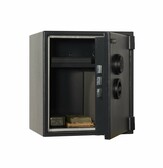
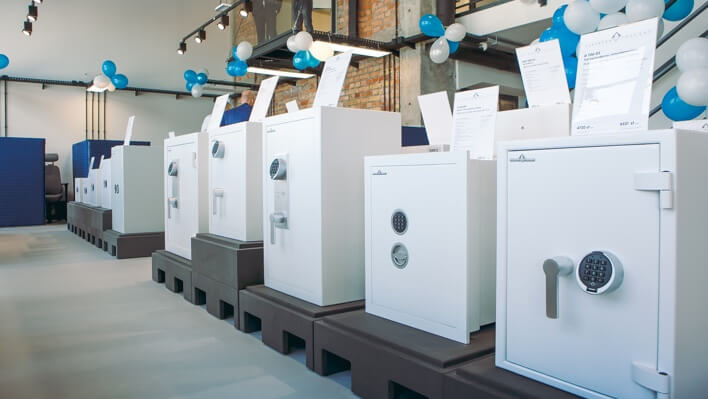
A home safe designed for storing money at home or in the office, commonly referred to as a strongbox, can be additionally equipped with an alarm system, silent alarm systems, internal lighting or shelves for small items, which increases the security of stored valuables. The Hartmann Tresore brand offers home safes in various sizes and models, allowing them to be tailored to individual needs and installation locations, such as in a wall or floor. It is worth remembering that, in accordance with certification requirements, all safes weighing less than 1000 kg must be permanently installed. The high quality of materials and modern technologies used in production guarantee effective protection against burglary, fire and flooding.
Thanks to the above-mentioned features, home safes are becoming one of the most important components of security. At a time when the risk of property loss is increasing, safes allow the secure storage of cash, documents and other valuable items, providing peace of mind for both individuals and businesses. Proper securing of property is not only a matter of convenience, but primarily a necessity in the face of war and uncertainty.
Home and furniture safes are an essential security feature in private properties, protecting your most valuable possessions and documents from the threats that any country may face.
Which lock for the safe?
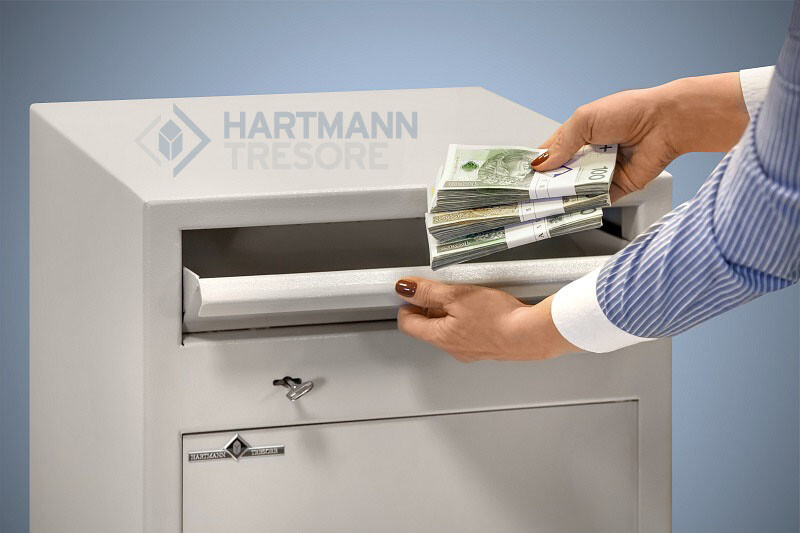
Electronic locks, including biometric models – fingerprint-based – offer convenient and secure access to the safe, eliminating the risk of losing the key, while traditional key locks remain a reliable solution for those who value traditional forms of locking. The option of attaching additional features, such as alarms or opening sensors, increases convenience and the level of protection. Safes and strongboxes with a solid construction, often equipped with additional security features, are able to protect important documents, including contracts, jewellery, cash and other valuables and items of sentimental or material value from potential thieves. Home safes are suitable for both families and businesses, providing security and convenience for everyday use. Specialised gun safes are used to store firearms safely, protecting them from accidents and theft.
Introducing home safes into your home or business is an investment that brings numerous benefits. They protect not only against theft, but also against the effects of fire and flooding during firefighting (fireproof safes), which is particularly important when storing documents and data carriers. Home safes do not just secure documents, but also data stored on digital media such as hard drives, USB sticks and LTO tapes. Depending on your needs and installation location, you can choose freestanding, wall-mounted or floor-mounted safes that will work in a variety of conditions and guarantee a secure place to store your valuables.
The Hartmann Tresore range includes a wide selection of home safes that will meet the expectations even of the most demanding users. Our products guarantee high quality, reliability and extensive additional accessories. They have been protecting our customers' property in Poland since 2002. By taking advantage of our experience and knowledge, you can ensure peace of mind and securing of your property, regardless of external circumstances.
Works of art in a safe – alternative forms of storing values
Works of art are not only objects of exceptional artistic value, but also often a significant component and carrier of wealth. Their storage requires special care and protection against theft, damage or loss.
Home vaults and shelters, available as adaptable modular structures and equipped with modern technologies such as shock sensors and opening delay function, offer effective safeguarding for valuable items, including works of art. Thanks to their solid construction and the possibility of customising their equipment, safes enable a secure storage of paintings, sculptures and collectibles, protecting them from burglary and theft. Modern safes and vaults also offer humidity control options and additional security features, making them the ideal solution for those who value safety and convenience. Storing works of art in a home safe not only protects your property, but also gives you peace of mind in uncertain times.
Storing valuable items
The secure storage of valuable items such as jewellery, cash or important documents requires the use of proven solutions. Hartmann Tresore home safes, thanks to their durable design and the use of modern technologies, offer reliable protection against theft, fire and other threats. Additional options, such as the installation of internal compartments, shelves or an alarm connection, allow the safe to be tailored to the user's individual needs. This makes home safes the ideal choice for people who want to be sure that their property and important documents are secured regardless of external circumstances. Storing valuables and documents in a safe not only protects them from theft, but also safeguards them against the effects of fire or flooding, which becomes particularly important in times of uncertainty.
Summary
In summary, the experience of Ukraine highlights the importance of conscious management of financial resources, taking the possibility of unpredictable events such as war into account. It is important to ensure financial liquidity, currency and geographical diversification of assets, and avoid excessive concentration of capital in illiquid assets, especially in areas of increased risk. The conflict in Ukraine has acted as a warning to the world, showing how quickly the conditions of life, security and of the functioning of the economy can change. In such situations, it is crucial not only to secure financial resources, but also to protect important documents, valuables and other precious items.
Home safes, made of durable materials and equipped with electronic locks and alarm systems, provide effective defence against potential thieves and other threats, such as fire or flooding during firefighting. Thanks to modern technologies, storing documents, jewellery, gold or cash in a home safe allows you to remain calm even in the most uncertain times. A properly selected safe guarantees security and certainty that your most important documents and valuables will stay intact, regardless of external developments. Don't take any chances, let our advisors choose a safe that is right for your needs and the risks you define. You have to trust someone, so trust us – we know what we are doing. Avoid price as the only selection criterion.