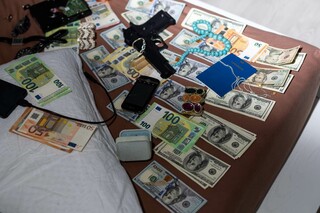
Experts recommend keeping 500–3,000 zloty in cash at home, plus an evacuation fund of 5,000–15,000 zloty in hard currencies (USD, EUR) in case of war or a crisis. In uncertain times, when more and more people are thinking about financial security, the question of how much cash to keep at home in the event of war is becoming crucial for every responsible household. It is worth having cash at home in case of restricted access to banks or electronic payments.
1. Introduction: how much cash do you need at home in the event of war?
In this guide, you will find specific amounts for a cash reserve tailored to various scenarios, tried-and-tested methods for storing money, principles of diversification across different currencies, ways to protect cash from theft, and practical tips based on experiences from armed conflicts. It is worth keeping not only cash at home, but also food supplies in the event of war or a crisis, to ensure your family’s safety during difficult times. It is recommended to store enough food and water to last for at least 72 hours.
This article is intended for anyone who wishes to prepare financially for a crisis, maintain a sensible approach to planning, and build a solid financial foundation for their family in the event of unforeseen circumstances.
2. Understanding a cash reserve in the event of war – key concepts
2.1 Basic definitions
A household cash reserve is a sum of 500–3,000 zloty in small denominations (do not keep 500-zloty banknotes) kept in an easily accessible place, intended for basic expenses during the first few days of a crisis, when banking systems may be unavailable. It should consist of small denominations (10, 20, 50 zloty) to facilitate smooth transactions. Unfortunately, even now – since the pandemic – the limit on a single cash withdrawal from ATMs is just 1,000 zloty.
The evacuation fund is a larger reserve of 5,000–15,000 zloty in hard currencies (USD, EUR, Swiss francs), intended to cover living expenses abroad for 2–3 months in the event of a sudden evacuation from the country.
Hard currencies are foreign currencies considered the safest in times of global uncertainty – the US dollar, the euro or the Swiss franc – which retain their value even during serious geopolitical crises. Experts suggest holding part of one’s portfolio in foreign currency to preserve capital value in the event of a fall in the value of the local currency.
2.2 Associations between different forms of security
Household cash constitutes the first level of financial security, forming part of a broader system of asset protection: cash reserve → emergency fund → savings in a foreign bank → brokerage account with foreign brokers → long-term investments in crisis-resistant assets.
This structure provides greater financial flexibility and protects against losing access to funds in various crisis scenarios, ranging from short-term power supply issues to a prolonged state of war. It is worth keeping money not only in cash, but also in various accounts – including bank, pension and brokerage accounts – to enhance security and diversify capital according to one’s needs and risk profile. Experience from Ukraine shows that access to cash, and particularly to foreign currencies, is significantly restricted during wartime, with the result that funds held within the country cannot be freely accessed (read more: Cash or Blik: lessons from the war in Ukraine).
3. Why is a cash reserve crucial in Poland in 2025?
Europe’s central banks officially recommend that citizens maintain a three-week cash reserve (around 500 euros per person), which confirms the growing importance of this issue at the level of state institutions. In countries such as the Netherlands and Sweden, central banks suggest keeping a cash reserve of between 170 and 500 euros. In Poland, given the potential threats and the possibility of an armed conflict, it is particularly important to have a cash reserve at home – it is worth keeping funds at home in case of emergencies, as financial institutions also emphasise. In Poland, experts stress that the probability of an armed conflict within the next 10–15 years is estimated at 15–25 per cent.
A practical example from 2022 illustrates what most Ukrainians experienced during the first weeks of the war – cash machines were inaccessible, payment cards did not work, and the banking system was virtually unusable for several days. Those with cash were able to buy food, fuel and medicines without any problems, whilst others were temporarily cut off from their savings.
According to research, 78% of Poles in 2024 have no cash reserves at home, which means that in the event of a war or a serious crisis, they will be entirely dependent on the banking system functioning properly.
4. Mortgage risks during wartime – what you need to know
In times of global uncertainty, having a mortgage can become a serious strain on your financial liquidity. In the event of sudden developments, such as the outbreak of war, the banking system may become unstable, and access to cash – whether in your bank account or withdrawn at a branch – may be restricted. Unfortunately, this means that making regular mortgage repayments may be difficult or even impossible for a certain period.
An additional risk is a potential fall in property values. In a crisis, flat and house prices may plummet, meaning that the value of your property could be lower than the outstanding balance of your mortgage. In such a scenario, selling the property would not cover your liabilities to the bank, and you would be left with debt.
5. Comparison of amounts and forms of cash storage
security period | amount in PLN | amount in hard currencies | form of storage | security level |
|---|---|---|---|---|
1 week | 500-1000 PLN | 200-300 EUR | home safe in S1 | very low |
| 1 month | 1500-3000 PLN | 500-1,000 EUR | safe in S2 + bank deposit box | low |
3 months | 3000-5000 PLN | 500-3,000 EUR | class 1 safe in acc.with EN 1143-1 | high |
emergency fund | 2000-5000 PLN | 5,000-15,000 EUR | class 3 safe in acc.with EN 1143-1 | very high |
Cost vs benefits: a class I home safe costs 2,000–3,000 zloty as a one-off expense, but protects cash worth several or over a dozen thousand PLN for life. A bank safe-deposit box costs 500–1,200 zloty a year, but guarantees access to funds even if there are problems at home. However, it may be inaccessible in the event of a crisis (banks will be closed).
It is worth keeping cash reserves in several places (if possible) or spreading them across two or more safes. This minimises the risk of losing all your funds in the event of a burglary, fire or disaster, as not all your assets are exposed to a single threat.
6. Step-by-step guide: how to keep your money safe at home?
Step 1: Determine the amount and currency breakdown
First, work out your family’s monthly living costs, taking into account: food (40%), housing (25%), transport and fuel (15%), medicines and essential services (20%). On this basis, determine your cash reserve using the following formula: weekly expenditure × 3 = minimum household reserve. It is worth keeping cash in various currencies at home in case of limited access to banks or electronic payments.
Recommended currency breakdown: 70% in Polish zlotys for day-to-day expenses in the early days of a crisis, 20% in euros as a universal European currency, and 10% in US dollars or Swiss francs as an additional safeguard. It is worth keeping part of your reserve in hard currencies at home, as the Polish zloty may depreciate sharply in the early days of a conflict.
Crisis needs checklist: It is recommended to have an emergency rucksack containing important documents and basic hygiene items.
● food for 2–3 weeks (1,000–1,500 złotys),
● petrol for the car (300–500 złotys),
● medication for chronic conditions (200–400 złotys),
● essential services and bills (500–800 złotys).
Step 2: Choosing a storage method
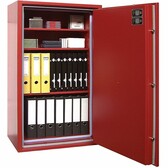
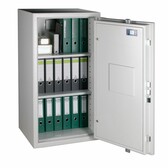
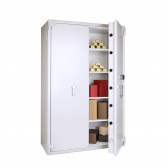
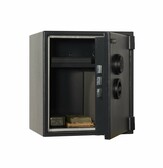
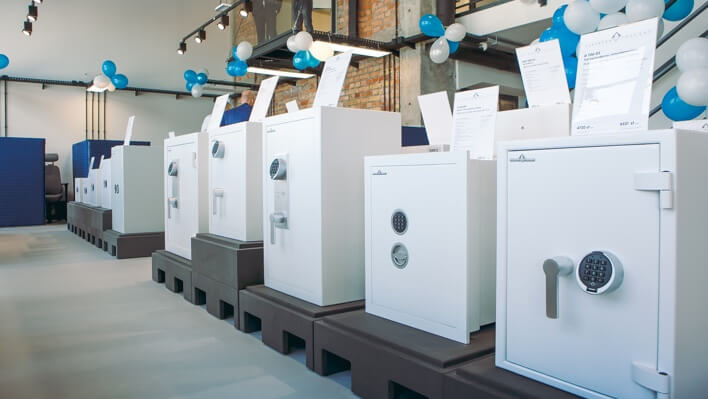
A sturdy home safe is the best option regardless of the value of the cash you’re storing. Why? Because it’s always to hand, and you can lock your entire emergency backpack inside it, allowing you to grab not only your money but also other essential items and documents in a single movement. Avoid S1 or S2-rated safes (weighing only around 20–30 kg) if you’re dealing with larger sums of cash. We recommend the HTIII 315-21 or D 109-08 safes by Hartmann Tresore if you require additional fire protection.
Alternative solutions:
- ● a safe-deposit box – ideal for emergency funds in hard currencies,
- ● spreading your assets across 2–3 secure locations – reduces the risk of losing everything,
- ● a joint account with a foreign bank – for larger sums and long-term security; opening an account with a foreign bank involves additional formalities, which vary depending on the country (e.g. Switzerland, the UK, EU countries),
- ● using a foreign broker is another option for diversifying funds outside Poland, particularly if you want flexible access to your brokerage account and the ability to transfer funds quickly in emergencies.
However, when it comes to funds that are readily and quickly accessible, a safe at home or at the company is the best option. It can be concealed and/or connected to an alarm system for added security.
Depending on the model, a safe costs between two and over a dozen thousand zlotys; delivery and installation cost around 2,000 zlotys, whilst a bank safe-deposit box costs around 1,200 zlotys per year. If you take the security of your money seriously, invest in a safe which has a security rating appropriate to the amount of funds stored inside. Take advantage of free advice from the specialists at Hartmann Tresore Polska. Our staff have over a decade’s experience, as well as the relevant knowledge and expertise to help you choose a safe suited to the size of your deposit and potential threats. Please feel free to contact us by phone, email or via WhatsApp.
Step 3: Security and discretion
A home safe should be placed in a hard-to-reach or out-of-sight location – ideally in the cellar, in a special recess, built into a wall (wall-mounted safe) or as a standard free-standing safe secured to the floor. Avoid obvious places such as the bedroom or study.
Rules of discretion:
• Only adult family members should know the location.
• Never mention cash in front of guests, or even in front of children.
• Do not post photos of the safe on social media.
• Order a safe from Hartmann Tresore Polska with a discreet delivery service so that neighbours cannot see what you are bringing into your home.
However, if you are unable to hide the safe or if you simply wish to install it in a wardrobe, bedroom or study – we have the right solution for you. Invest in a robust, high-quality safe and don’t worry about it being visible – these safes can withstand a great deal, and will alert security themselves if necessary. Don’t take any chances; make the most of our many years of experience. Hartmann Tresore Polska has been in business since 2002 and, since then, we have supplied tens of thousands of safes, vaults and armoured doors – including explosion-proof models – to companies, government agencies, the military and, above all, private customers. If you’re also considering investing in a suitable safe, make the most of our expertise; we look forward to hearing from you.
An additional advantage of a home safe is that, as well as currency, you can also store gold bars, silver bars or gold and silver bullion coins in it, which can serve as an additional store of value in the event of a crisis. Furthermore, you can keep a ready-packed emergency evacuation backpack in your home safe if you are considering leaving the country in the event of war.
Documentation: Take photographs of the serial numbers on your banknotes and keep these separate from your cash. Keep physical cash in anti-static plastic bags to protect it from moisture. Storing large sums of cash may arouse suspicion of money laundering, so it is worth documenting the origin of the funds in case of enquiries from the bank or the authorities.
7. Investing during wartime – does it make sense?
During a war or other crisis, investing requires particular caution and the use of common sense. Financial markets become highly volatile, and traditional instruments can lose value overnight. In such conditions, it is crucial to choose assets that are resistant to inflation and sharp price fluctuations. It is also worth investing in different types of assets, preferably those with low correlation – that is, assets that react differently to crisis situations in the market (for example, when share prices fall, the value of gold may rise). Government bonds, particularly inflation-indexed ones, are recommended as an alternative to savings accounts. However, it is worth remembering that bonds are not always a safe haven.
Can we regard government bonds as a safe option compared to savings accounts? German history shows that this has not always been the case.
Before the Second World War, the German state issued bonds which lost all their value after 1945. The currency reform of 1948 cancelled the Third Reich’s liabilities, leaving investors with worthless securities.
Conversely, those who had invested before the war in shares of German industrial conglomerates such as Volkswagen, Daimler-Benz and Siemens were successful, despite the destruction and the difficult post-war period. These companies rebuilt themselves during the economic miracle (Wirtschaftswunder), and their shares formed the basis of many investors’ post-war wealth.
Conclusion: History teaches us that government debt in unstable political conditions can lead to losses, whilst shares in sound companies, despite the risks, may prove to be a more enduring source of wealth.
Is cash king?
In practice, experts recommend considering investments in hard currencies, such as Swiss francs, which have historically been regarded as a safe haven in times of crisis. Property can also be a good hedge, provided it is situated in stable locations and is not overly burdened by a mortgage.
It is also worth diversifying your investment portfolio – do not rely solely on a single market or currency. Consider investing in gold, US shares and, above all, globally-focused exchange-traded funds (ETFs), which can provide greater flexibility and resilience to crises in the event of sudden developments. If you’re looking for information on ETFs, the best place to start is Atlas ETF, created by the excellent experts Jacek Lempat and Artur Wiśniewski.
Remember that during a war, the most important thing is capital preservation, not a quick profit. Before making any investment decisions, consult a financial adviser and monitor the geopolitical situation regularly. Use common sense and do not invest funds that you might urgently need for day-to-day expenses or evacuation.
8. Protecting against losses: how to minimise the risk of losing your savings
In a crisis situation, such as a war, protecting your savings requires a well-thought-out strategy and diversification. First and foremost, it is worth keeping some of the money in cash, preferably in small denominations, stored in an easily accessible place (ideally in a handy home safe) – this will allow you to cover basic expenses quickly should the banking system cease to function or withdrawal limits be imposed.
The next step is to open an account with a foreign bank or use the services of a foreign broker, such as Interactive Brokers. This allows you to keep some of your funds outside the Polish banking system, providing additional security in the event of accounts being frozen or restrictions on foreign currency transfers. It is also worth considering holding a brokerage account in foreign currencies, which increases flexibility and access to global markets.
Don’t forget to invest in inflation-resistant assets, such as gold, Swiss francs or property in stable locations. Monitor the situation on the financial markets regularly and be ready to act quickly if any warning signs emerge.
In addition, consider insuring your savings and the safe in which you keep your cash, and use highly reputable financial institutions that will ensure the security of your accumulated funds even in the case of ordinary theft. Bear in mind that standard insurance policies will not cover you during a war, martial law or an attack deemed to be an act of terrorism. This will ensure your funds are better protected even in the most uncertain times.
Remember: diversification is the key to security – do not keep all your money in one place, in a single account or in a single currency. Use common sense and regularly update your strategy in response to the changing geopolitical situation.
9. Common mistakes in storing household cash
Mistake 1: Keeping all your money in one place – risk of the entire amount being stolen during a burglary. Spread your funds across at least three locations: the first safe (50%), a hidden spot in your home or a second hidden safe (e.g. a ‘ghost safe’ – ask our adviser) (30%), and a bank safe-deposit box (20%).
Mistake 2: Choosing only large denominations (500 zł and 200 zł notes) – during wartime, shops and market traders may struggle to give change. Use 10, 20, 50 and 100 zł notes – they are practical and accepted everywhere.
Mistake 3: Lack of protection against damp and fire – banknotes can be damaged by weather conditions. Use fire-resistant safes compliant with class S 120 P according to PN-EN 1047-1, which protect against fire and fire-extinguishing water during firefighting operations. Avoid using plastic film to protect banknotes, as it may damage them when exposed to heat. Instead, you can use anti-static plastic pouches to protect banknotes from moisture.
Professional tip: Check the condition of your cash every 6 months and adjust the level of security in line with developments in the geopolitical situation. It is also worth remembering that, in addition to cash, financial instruments such as precious metal bars or bullion coins can be an important part of diversifying your assets in uncertain times. Furthermore, it is recommended to invest in foreign ETFs with a global reach to increase portfolio diversification.
10. Real-life example: an emergency fund of 10,000 zloty
Case study: The Kowalski family, a family of four from Warsaw, set aside a cash reserve of 10,000 zlotys after the war in Ukraine began in February 2022.
Initial situation: A married couple with two children, monthly living costs of 8,000 zł, with all their savings previously held in a bank account.
Steps taken:
- 1. 3,750 PLN in Polish zlotys, 870 EUR, along with important documents and passports – stored in a Class I safe in the cellar (banknotes in denominations of 20, 50 and 100 PLN, and 10, 20, 50 EUR),
- 2. 2,500 zł in US dollars – hidden in a waterproof container in a discreet location.
Results after 3 years: The family maintained their peace of mind during successive crises (power cuts, cyber-attacks on banks, a drone attack on Poland), incurred no additional costs in maintaining the reserve, and had immediate access to their funds in every situation. Should evacuation become necessary, they will not forget anything – all their funds are kept in one place.
It is worth considering further diversification of the locations where funds held in bank accounts are stored, for example by placing part of their savings in IKE/IKZE accounts, which allows them to avoid the ‘Belka tax’ on capital gains. An alternative to cash could also be investing in property; however, this carries a different risk profile, particularly in the context of armed conflicts, and is also characterised by very low liquidity – it is difficult to sell a property successfully during a war.
Additionally, you can take advantage of the OIPE scheme, i.e. the European pension scheme at Finax. OIPE is a pension scheme very similar to the Polish IKE, but with a European scope. Pension funds accumulated at Finax not only offer tax protection – that is, exemption from capital gains tax upon withdrawal – but, unlike the IKE and IKZE schemes, they allow you to transfer pension funds accumulated in your Finax account to another EU country, which can be of considerable importance in the event of protracted local conflicts and uncertainty about the future. Funds from an IKE can be transferred to the OIPE scheme at Finax if you cannot afford to maintain multiple pension schemes.
aspect | before | after |
|---|---|---|
cash reserve | 0 PLN | 10,000 PLN |
currencies | 100 % PLN | PLN, 37.5% EUR, 25% USD |
storage locations | 1 (bank) | 2 (safe + hiding place) |
time to access funds | 24–48 hours | immediate |
11. Frequently asked questions about emergency funds in the event of war
Q1: Is 1,000 zloty a sufficient reserve for a single person?
A: It’s a good idea to have an emergency fund that will allow you to survive for at least three months. If you can’t afford that, it’s a good idea to have at least the aforementioned 1,000 zł to start with. That will be enough for the first few days of a crisis. If you’re considering emigration, however, this amount will definitely be insufficient as an evacuation fund. Whilst a single person has fewer needs, in the event of war they may require more money for transport or accommodation.
Q2: Which euro banknotes are best to keep?
A: The 10, 20, 50 and 100 euro notes – they are easy to hide, accepted worldwide, do not arouse suspicion when exchanged, and offer good value for their size. Avoid 200 and 500 euro notes – they are difficult to spend in a crisis. It is worth remembering that the euro, the Swiss franc and the US dollar, issued by the United States, are also accepted currencies in crisis situations.
Q3: Is it possible to hold part of the reserve in gold?
A: Yes, it is recommended that up to 20 per cent of the reserve consist of bullion coins, such as the Vienna Philharmonic or the Krugerrand. Gold, being an asset independent of liabilities, retains its value; however, during wartime it may be difficult to sell quickly. It is worth bearing in mind that during the Second World War, many countries introduced gold confiscations and strict capital controls, which could have restricted access to one’s own funds. Therefore, the majority of reserves should remain in the form of cash.
Q4: What should you do with cash during a prolonged absence?
A: Use a home safe or a bank safe-deposit box – never leave large sums of cash unsecured without professional protection. Inform a trusted person of the location of your funds and how to access them, just in case.
Q5: How do Polish shares perform during a war?
A: Concentrated investments in Polish shares (home bias) may be more exposed to significant falls in value and liquidity constraints (e.g. stock exchange closures, suspension of trading) during a war than shares in foreign companies. In the past, for example during the outbreak of the war in Ukraine or the Covid pandemic, share prices on the Warsaw Stock Exchange reacted more strongly than those in developed markets. It is worth comparing the performance of investments in Polish shares with other markets to better assess the risk.
Q6: Is buying property a good way to safeguard one’s assets?
A: Buying property, both at home and abroad, can be an effective form of diversification and asset protection. Investments in building plots, agricultural land or overseas property are often used as part of a capital preservation strategy in uncertain times. However, investing in property located in a zone of armed conflict can prove to be a disastrous investment – one just needs to look at the images from eastern Ukraine...
12. Summary: The most important rules for keeping cash safe
Keep things in proportion: 500–3,000 zł at home for the first few days plus an evacuation fund in hard currencies kept safe. This is the foundation of financial security in uncertain times.
The 2–3-location rule: Divide your cash between a high-quality home safe (50 per cent), a bank safe-deposit box (30 per cent) and a secure hiding place (20 per cent). Do not go overboard with the amounts – it is better to have a moderate reserve that is well secured than a large one in risky circumstances.
Currency diversification: 70% Polish zlotys for day-to-day needs, 20% euros for flexibility within Europe, 10% US dollars or Swiss francs as a last-resort safeguard in the event of war. As part of diversification, it is also worth considering investing in property and Polish shares as elements of a financial fortress, which can increase the portfolio’s resilience to crises and unforeseen events.
Security and discretion: A safe of at least class S1, no information disclosed to anyone outside the immediate family, regular checks on the condition of banknotes and updating the strategy in line with the geopolitical situation.
Next step: Start by purchasing a suitable safe and exchanging your first 1,000 zł for euros at a currency exchange bureau. It is worth taking care of this today, as in an emergency it may be too late to make preparations.
Remember: a cash reserve is not an investment, but insurance. It is intended to ensure survival during a crisis, and not to grow your capital. Combine it with other forms of protection, such as an account with a foreign bank, a European pension, a brokerage account with foreign brokers or inflation-proof assets, to create a comprehensive financial survival strategy and build your own financial fortress.
And most importantly, last but not least: don’t let it drive you mad. As Stephen King wrote in The Shawshank Redemption: prepare for the worst, but hope for the best. Remember that, whatever the circumstances, optimism is the only sensible strategy. Don’t follow every news, don’t succumb to the spiral of fear so eagerly fuelled by the media, and focus on the things you can influence.