Investment gold is one of the most stable forms of capital investment, protecting investors against inflation and economic uncertainty. Investment gold is a precious metal of exceptional value, prized by investors worldwide. In this guide, you will learn how to buy investment gold safely and how to store it effectively in 2026.
Introduction: what is investment gold and why does it matter
For millennia, the yellow metal has served as a safe haven for savings. In recent years, against a backdrop of wars and high volatility and unpredictability in the stock markets, we have seen a record surge in interest in physical gold – according to estimates by the Goldenmark Group, Polish households and institutions purchased around 14 tonnes of gold in 2024, which is a historic record. Investment gold is most commonly purchased in the form of bullion bars and coins.
This article covers all the key aspects of investing in gold: from basic definitions, through the purchasing process, to secure storage. We will also outline the current market situation and answer the most frequently asked questions. The price of gold is constantly updated using the most accurate sources, enabling investors to make informed decisions.
Basic concepts: types and definitions of investment gold
Main categories of investment gold
Under Polish law (Article 121 of the VAT Act), investment gold is exclusively:
- ● bullion coins – meeting specific purity criteria and being legal tender in the country of issue,
- ● gold bars – with a fineness of at least 995/1000 (99.5% purity),
Gold bars are available in various weights – from 1 g to 1000 g. Smaller bars (1 g, 5 g, 10 g) offer greater flexibility, whilst larger bars (100 g, 250 g, 1000 g) have lower mark-ups relative to the price of gold. The weight of a gold bar is crucial for confirming its authenticity and investment value, which is why each bar should have a precisely specified mass.
The most popular gold bullion coins are:
● Krugerrand (South Africa) – 1 oz,
● Maple Leaf (Canada) – available in 1 oz, 1/2 oz, 1/4 oz, 1/10 oz,
● Vienna Philharmonic (Austria) – in various weights,
● Kangaroo (Australia) – issued by the Perth Mint.
Related concepts and terminology
Investment gold plays a significant role in portfolio diversification strategies. Unlike jewellery or other precious metal products, such as high-quality coins with unique designs, investable gold:
● is valued solely on the basis of the current spot price of the metal,
● is not subject to VAT,
● is characterised by high liquidity worldwide,
● serves as a hedge against inflation and currency destabilisation.
Physical gold has for centuries been the cornerstone of safe investment, symbolising enduring value and certainty in volatile market conditions. Its role as a hedge against inflation stems from its unique properties, which mean that, unlike fiat currencies, gold does not lose its value as price levels rise. As a result, investors can count on the stability of their investment portfolio, even during difficult economic periods. Rising energy costs and stricter environmental regulations are increasing the costs of gold mining, whilst its use in various industrial sectors, amongst other things, can influence its price and availability on the market. Purchases of gold in the form of jewellery also influence global demand for this commodity, which further highlights its importance in the global economy.
Portfolio stability is a key element of an investment strategy, and physical gold serves a protective function within it. Including gold in an investment portfolio helps to mitigate the risk associated with fluctuations in other assets, such as shares or bonds. Capital protection through gold is particularly important in times of economic uncertainty, when traditional financial instruments may experience high volatility.
Furthermore, investment gold offers liquidity and ease of storage, making it an attractive choice for both novice and experienced investors. The option to purchase gold bars and bullion coins of various weights allows investors to tailor their investments flexibly to their individual needs and budget.
It is also worth noting that physical gold is often regarded as a safe haven during periods of geopolitical and financial crisis. Its value rises when other markets experience turbulence, which further highlights the importance of this precious metal as a stabiliser for an investment portfolio.
In summary, physical gold is not only a precious metal of high value, but above all an effective tool for safeguarding capital and building financial stability across a variety of market conditions.
Precious metals: gold and its investment alternatives
Among the methods of secure capital investment and effective asset protection, it is gold that enjoys the greatest trust among investors worldwide, especially during difficult economic times. Its exceptional stability and versatility mean it is regarded as a reliable ‘safe haven’ for savings.
The most popular forms of investment gold are gold bars and bullion coins. Gold bars are rectangular pieces of gold of varying weights and fineness. Each gold bar is marked with a unique serial number and details of its weight and fineness. The purity of gold in bars is usually at least 99.99%. They are available in a wide range of weights – from a practical 1 g, through 10 g, up to an impressive 1 kg; however, on the international market, the most important standard is the so-called ‘good delivery bar’ weighing 400 oz (~12.5 kg). This allows the size of the investment to be tailored to the buyer’s individual needs and financial capabilities. Gold bars are characterised by the highest purity, often reaching 999.9, which guarantees their value and ease of resale.
Investment coins, such as those minted by renowned mints, e.g. The Royal Mint, are equally popular with investors. Their recognisability, standardisation and the option to purchase them in various weights make them an attractive choice for both novice and experienced investors.
In addition to gold, other precious metals, such as silver and platinum, are increasingly appearing in investment portfolios. Silver, thanks to its lower unit price, allows diversification even with smaller amounts. Platinum and palladium, although less popular, are gaining in importance due to their industrial applications and potential for appreciation in value.
Regardless of the precious metal chosen, it is crucial to invest in products from reputable mints that come with certificates of authenticity. This ensures that investors can be confident their capital is properly safeguarded, and that the selected bullion bars or coins will retain their value over the years.
Why is investment gold important in 2026?
Precious metals play a special role in difficult economic times. Historical data show that during periods of high inflation, gold effectively protects the value of savings:
- ●
Inflation protection: Between 1970 and 2020, gold achieved an average annual rate of return of 7.8%, outperforming inflation.
- ● Low correlation: Gold has a weak correlation with shares and bonds, making it an ideal asset for diversifying and hedging an investment portfolio against high volatility. Put simply: gold tends to rise in value when share prices fall, which helps to stabilise an investment portfolio.
- ● Growing interest from central banks: The National Bank of Poland (NBP) has increased its gold reserves to over 300 tonnes, placing Poland amongst the EU countries with the largest reserves. Gold purchases by central banks influence the global market, enhancing its stability and significance as a reserve asset.
It is worth noting that an increasing number of retail investors are also choosing to invest in other precious metals, such as silver or platinum, viewing them as safe and attractive investment options within a diversified investment portfolio.
It is worth noting, however, that there are varying, often conflicting, views amongst investors regarding investing in gold. For example, Warren Buffett believes that investing in gold is unproductive, as it does not generate added value over the course of the investment. Its value is based on the belief that someone else will pay more for it in the future, which means it is a form of speculation. Nevertheless, experienced investors usually allocate between 5 and 15 per cent of their portfolio to precious metals, treating them as a hedge against systemic risk.
Comparison of forms of investment gold – table
The table below compares the key features of gold bars and bullion coins, providing a quick overview of the available investment options.
parameter | gold bars | bullion coins |
|---|---|---|
available weights | 1 g – 1000 g | 1/10 oz – 1 oz |
premium over the price of gold | 2–5 % | 3–8% |
liquidity | high (larger bars) | very high |
storage | compact | easier (smaller sizes) |
VAT taxation | 0 % | 0 % |
authenticity verification | certificate + serial numbers | widely recognised |
minimum investment | from ~420 zloty (1 g) | from ~800 zloty (1/10 oz) |
However, it is worth clarifying that the ranges given depend on size and form: large bars (100 g+) often carry a premium closer to 1–2%, whilst small bars (1 g, 5 g) carry a premium of over 10%. 1 oz coins usually offer 3–6%.
Step-by-step guide: how to buy investment gold?
Step 1: Define your investment goals and budget
Before making your first purchase of physical gold, you should:
● Assess your personal financial situation – gold should form part of your long-term savings.
● Determine the percentage of gold in your portfolio – experts recommend 5–15% of your total assets.
● Choose between regular, incremental purchases and a one-off investment.
● Remember to rebalance your portfolio periodically, i.e. maintain a constant percentage of your portfolio in gold, which means buying when the price of gold falls and selling when it rises.
Pre-purchase checklist:
● Stabilise your financial situation (emergency fund) – do not invest in gold if you do not have sufficient funds to cover day-to-day and unforeseen expenses
● A clearly defined investment objective – why are you buying investment gold, and what do you hope to achieve?
● A storage and insurance plan
● A budget for premiums and transaction costs.
Step 2: Choosing the form of gold and a trusted dealer
In Poland, any business entity may sell gold bars and bullion coins provided it meets the legal requirements (e.g. the VAT Act and the Act on Counteracting Money Laundering and Terrorist Financing (AML)). You should check the dealer’s reputation and LBMA accreditation (London Bullion Market Association).
Criteria for selecting a dealer:
● It is worth checking the dealer’s reputation (a long track record and positive customer reviews)
● Transparent price lists with clearly defined premiums
● Products should be offered with a certificate of authenticity; pay attention to the packaging and serial number.
Reputable sellers offer products that meet the highest standards of quality and authenticity, ensuring the security of your investment and customer trust.
Recommended sellers in Poland:
● Mennica Polska,
● Mennica Skarbowa,
● ASCOIN,
● Goldenmark.
It is worth noting that Poland is also home to a certified producer of investment gold and silver bars. KGHM Polska Miedź has announced that the investment bars produced by the company are now available from reputable retailers. Retail customers can purchase gold and silver bars in weights ranging from 1 ounce to 1 kg. KGHM’s annual gold production exceeds 2 tonnes. Until now, KGHM has mainly offered gold bars in larger sizes, which were primarily sold to business customers. KGHM Polska Miedź S.A. is now expanding its range by introducing six new types of bars weighing: 1 oz (approximately 31.1 g), 50 g, 100 g, 250 g, 500 g and 1,000 g. Gold and silver bars are produced at the Precious Metals Division of the Głogów Copper Smelter, which holds Good Delivery accreditation issued by the LBMA (London Bullion Market Association) and the prestigious Copper Mark certificate.
Step 3: Completing the purchase and secure storage
Pre-purchase verification process:
- ● checking the serial numbers of the bars,
- ● verifying the certificates of authenticity and their validity,
- ● checking that the products originate from accredited mints (e.g. Argor Heraeus, The Royal Mint, Perth Mint) and verifying that they are LBMA-accredited, which confirms their high quality and prestige for both gold and silver.
Delivery options:
● collection in person – recommended for first-time purchases; this ensures a high level of transaction security and allows you to verify the product’s authenticity directly upon collection,
● courier delivery – insured high-value parcel,
● delivery to a depository – directly to a professional storage facility.
Gold and silver storage services are also available, such as bank safe-deposit boxes or commercial safe-deposit boxes, which guarantee security and allow you to tailor the service to your individual needs.
Measures of success:
● retention of all certificates and documents,
● regular monitoring of the investment’s value and the security of storage,
● updating insurance cover as the value increases,
● monitoring the order status and security of each transaction.
How to store investment gold securely?
The period between purchasing gold and realising profits from the investment is a time when the investor must ensure the secure storage of the purchased gold bars or bullion coins. How can gold bars and coins be stored securely?
Bank safe-deposit boxes or commercial safe-deposit boxes
Renting a bank safe-deposit box or a commercial safe-deposit box is one of the safest solutions for investors holding physical gold. It provides protection against theft, loss and damage to the bullion. Although many banks in Poland restrict access to their safe-deposit facilities, investors can use the services of numerous commercial enterprises offering such solutions. In addition, many of these companies offer surveillance, alarm systems and deposit insurance, which significantly enhances security. One such provider is Centrum Depozytów Bankowych. Renting the smallest safe deposit box there for a year costs around 1,250 zlotys and it is possible to negotiate more favourable rates for longer rental periods. Even in the smallest safe-deposit box, measuring 400 mm deep, 300 mm wide and 100 mm high, an individual investor can store a considerable number of gold bars or bullion coins, meaning that the annual cost of the safe-deposit box is only a small fraction of the value of the assets and a relatively low price to pay for a high standard of security.
When choosing a safe deposit box, consider the location of the facility and the ease of access to the box, so that you can manage your gold quickly and conveniently should the need arise. For investors holding larger quantities of gold, bigger safe deposit boxes or individual vaults are also available, capable of accommodating larger gold bars and more extensive collections of bullion coins.
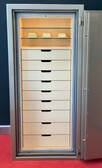
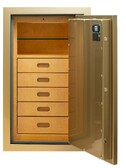
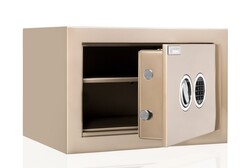
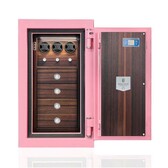
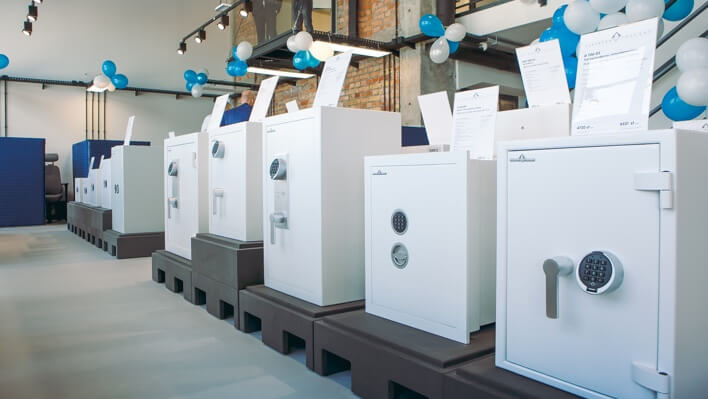
Investment gold safe
An investment gold safe is one of the most popular and secure solutions for those who wish to store their precious metals at home. Safes offer robust protection against theft, unauthorised access and mechanical damage. Furthermore, a home safe can also be used to store other assets, documents or cash. When choosing a gold safe, it is worth paying attention to several key aspects:
- ● Burglary resistance class — safes have different resistance classes, confirmed by relevant certificates. For storing valuable bullion and coins, it is recommended to choose the heaviest possible safe with a resistance class of at least III according to the EN 1143-1 standard; our range even includes class VII safes. For investors who prioritise the highest level of security or who hold significant amounts of gold, we recommend safes with the ‘KB’ feature, i.e. a special construction that prevents the use of diamond drill bits and hole saws. These are very robust and heavy safes offering maximum protection.
- ● Size and capacity — the safe should be large enough to accommodate all the gold bars and bullion coins you own, with room to expand your collection in the future.
- ● Mounting and location — the safe should be securely anchored to the floor or wall to make it even more difficult to remove. It is also important to place it in a discreet location that is difficult for potential burglars to access (e.g. a cellar).
- ● Additional security features — modern safes can be fitted with electronic locks using alphanumeric or biometric codes, alarm systems and a ‘silent alarm’ function, which further enhances the security of the stored gold in the event of forced entry.
Having a safe at home gives the investor full control over their assets, unrestricted access and the ability to retrieve the contents quickly if necessary. However, it is worth remembering that storing gold at home requires taking appropriate precautions, such as limiting information about the storage location to trusted individuals and regularly insuring the valuable contents.
The safe should be very heavy. The location of the safe in the house is also of great importance. It is best to place it in a discreet spot, difficult to access by outsiders, yet convenient for the owner. Fastening the safe to the floor or wall increases its stability and makes it harder to carry away. Furthermore, secure anchoring increases the ‘weight’ of the safe, effectively preventing it from being taken away quickly, whilst connecting it to an alarm system significantly reduces the security company’s response time.
Consider insuring the contents of the safe as well, as this provides additional financial protection in the event of theft or other unforeseen incidents. Insurance policies often also cover damage caused by fire, flooding or a collapsing ceiling, which significantly enhances the security level of the investment.
In summary, a safe for investment gold is a practical and effective solution for investors who value convenience and security, particularly when it is properly selected and used in accordance with safety guidelines. Take advantage of a free consultation at Hartmann Tresore to choose the perfect home safe for your investments; call +48 22 850 40 45 to find out which safe to choose.
A home vault for investment gold
A home vault or safe for investment gold is a popular solution for people who want to have constant and convenient access to their investment in the comfort of their own home, whilst ensuring the highest level of security.
Who should consider installing such a vault? Primarily, people who hold significant quantities of gold and other large, valuable items, such as works of art, as well as investors who wish not only to protect their accumulated capital but also to ensure the safety of themselves and their loved ones in emergency situations.
A home safe should have a high burglary resistance rating – at least Class V or higher is recommended, confirmed by relevant certificates such as VdS or ECB-S. It should be fitted with shock and intrusion sensors and connected to the home’s alarm system. The security class should be tailored to the value of the items stored – the higher the value, the higher the safe’s burglary resistance class should be. Such solutions effectively deter unauthorised access and minimise the risk of theft. It is advisable to consult the security class with your insurer and ensure the contents are adequately insured for the appropriate amount.
It is worth planning the construction of a home vault at an early stage. Hartmann Tresore offers very robust strongrooms or reinforced concrete shelters integrated into the building’s structure, which can also be concealed inside the house. (watch the video on the construction of a poured-in-place vault) For existing buildings, there is an option of installing a modular vault, ensuring complete security without the need for compromises.
video showing the construction of a modular vault with a panic room function
A home vault is also a convenient solution, allowing quick access to gold bars and bullion coins when needed, without having to use external storage facilities. However, it is important to exercise particular discretion and caution so as not to reveal information about your assets.
In summary, a home strongroom for investment gold is a practical and secure solution for investors who value control and quick access to their capital, whilst also wishing to create a safe space in their house that will serve as a refuge not only for their accumulated money but also for their household members.
Summary
Choosing the right place to store investment gold is crucial for protecting your capital. A bank or commercial safe-deposit box is a solution that combines convenience, security and professionalism, which is particularly important for larger investments in precious metals. The downside is that you incur ongoing costs for the entire duration of the deposit’s storage, and access is restricted. The advantage is the low entry threshold and the high level of security offered. If you do not have too many gold bars or bullion coins, this will be the ideal solution to start with.
A home safe or vault is the ideal solution for investors who do not trust external parties, value discretion and prefer to keep their assets at home. When investing in your own safe or strongroom for investment gold, do not be tempted by a low price. Why? Because you will end up with a safe that is:
● inadequate in terms of security level and functionality for the value of the bullion or coins stored within it,
● unsuitable due to a potential risk
We recently wrote on our blog about a Warsaw resident who, during a weekend away, lost the equivalent of 4 million zlotys, which were taken from his flat along with the safe. Find out what mistakes he made and, before you buy a safe, find out what sort of safe you need – or trust our experience and take advantage of a free consultation with our specialists.
Remember that, regardless of the method you choose for storing investment gold, secure storage is not just a matter of physical protection but also of adequate insurance. Many companies offer insurance policies covering the value of the precious metals stored, which provides additional protection for the investment against unforeseen events.
How to sell investment gold as a private individual?
Buying investment gold is not the hard part; the real challenge is selling it well and safely, tax-free. Selling investment gold is a key stage of investing in precious metals. In 2025, the gold buying market in Poland is well-developed, and the selling process is simple and secure, provided you adhere to the relevant standards.
Where can you sell investment gold?
In Poland, private individuals can sell gold:
● to reputable precious metals dealers,
● at mints and currency exchange bureaux,
● at pawnbrokers and jewellers,
● via online platforms (auctions, metal exchanges).
In 2025, the market is broad and competitive, with many companies offering online buying services with free valuations.
How does the selling process work?
1. Authenticity verification – certificate, serial number, hallmarks.
2. Valuation – best done with dealers offering a clear buy-back margin.
3. Documentation – when selling to a private individual, draw up a simple contract.
Selling investment gold in Poland is relatively easy and safe. All you need to do is ensure you have the certificates and documents in order and choose a reputable buyer. This allows you to recoup your capital quickly – without taxes or unnecessary paperwork.
Will you have to pay tax?
No, if more than 6 months have passed since you bought the gold – the sale is not subject to tax (PCC). However, it’s worth keeping the invoice or other proof of purchase in case of an audit.
The most common mistakes when investing in gold
Mistake 1: Buying on auction sites without verifying the seller. Many people fall victim to counterfeits or dishonest sellers. Always buy from authorised dealers with the appropriate licences.
Mistake 2: Incorrect storage leading to damage. Gold should be stored in a dry, secure place, protected from scratches and exposure to chemicals.
Mistake 3: Ignoring transaction costs and premiums. The premium added to the price of gold can range from 2% to 8%. Always include these costs when calculating the profitability of your investment.
If you have any doubts about buying investment gold, it is worth consulting an expert or an authorised dealer before making a decision. If you would like to find out how to store gold safely, seek advice from the experienced specialists at Hartmann Tresore. Call or email us and we will get back to you straight away.
Professional tip: Start investing with smaller amounts, buy regularly and always verify the authenticity of products with reputable LBMA-accredited dealers.
Frequently asked questions about investment gold
Q1: Is investment gold subject to VAT in Poland? A1: No, investment gold that meets the criteria (bars with a fineness of at least 995/1000 and eligible bullion coins) is exempt from VAT in accordance with the EU directive.
Q2: Where is the best place to store physical gold? A2: Options include a home safe, a bank safe-deposit box or a professional storage facility. Adequate insurance and discretion in storage are key.
Q3: What is the minimum amount required to start investing in gold? A3: You can start by purchasing as little as 1 gram of gold (approximately 300–400 zł). It is worth investing smaller amounts regularly rather than waiting until you have a larger sum.
Q4: Is it worth investing in silver or platinum instead of gold? A4: Silver and platinum have different characteristics – greater volatility and industrial applications. Gold remains the most stable precious metal for capital preservation purposes.
Q5: How can you verify the authenticity of the gold you have purchased? A5: Check serial numbers and certificates from accredited mints, and use verification services provided by authorised dealers. Avoid products without the appropriate documentation.
Q6: Are gold bars suitable as gifts? A6: Yes, gold bars make an elegant and valuable gift for special occasions.
Q7: Do you have to sell to the same dealer? A7: No. Gold with an LBMA certificate, a serial number and intact packaging has global liquidity. You can sell it to any reputable entity – in Poland or abroad.
Key takeaways on investment gold
1. Physical gold is an effective hedge against inflation and financial instability, as proven by its long history.
2. Choosing a reputable dealer authorised by the National Bank of Poland (NBP) is the foundation of a safe investment – never buy from unverified sources.
3. Diversification between gold bars and bullion coins increases portfolio flexibility and investment liquidity.
4. Regular investing in small amounts is better than waiting for ‘ideal’ market conditions.
5. Secure storage and insurance are key elements of a long-term strategy.
Start your journey into gold investing today – even a small allocation of 5% of your portfolio can significantly increase its stability. Check current gold prices with authorised dealers and consult an investment adviser to tailor your strategy to your needs.